

Understanding the significance of fonts in graphic design is crucial, and it’s essential for designers to grasp the unique attributes of each font. This article dives into the disparities among TrueType, Postscript, and OpenType fonts, while also examining the regulations governing the proprietary copyright of fonts.
POSTSCRIPT FONT

In 1984, Adobe introduced a new kind of font based on their postscript language, designed specifically for print publishing. These fonts, also known as Type 1 fonts, are generated from two files: a digital file with bitmap information for display, and an outline file for printing, resulting in more reliable output. Postscript also employs scalable font technology, allowing it to be encrypted and compressed, with “hints” that enhance text appearance at 300 dpi and lower. It is favored for its high-quality output and precision, although it can be more challenging to work with than TrueType due to the need for specialized software for editing.
TRUETYPE FONT
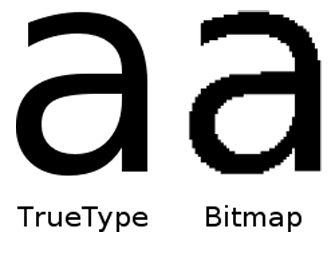
In 1991, Microsoft and Apple wanted to use Type 1 fonts but didn’t want to pay Adobe. Instead, they worked together to create a new font and printing technology. Eventually, Apple developed TrueType. TrueType has two parts: the fonts themselves, which come in thousands of styles, and the rasterizer, a software built into Mac and Windows systems.
These parts are needed to show and print TrueType fonts on a computer, and how they work together determines how the font looks. TrueType is a scalable font that uses math to look like a vector. It became popular because it’s easy to use, looks great on screens, can be customized, and works on most operating systems.
OPENTYPE FONT
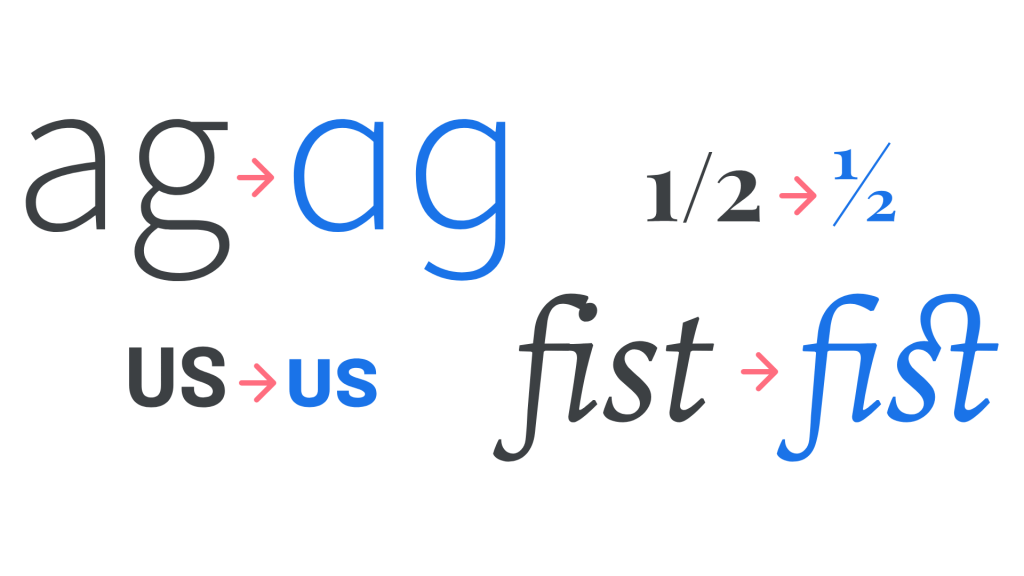
In 1997, Microsoft and Adobe aimed to expand Apple’s TrueType font format and created OpenType fonts. These fonts, like TrueType, are based on Unicode, a system for encoding various writing systems worldwide, allowing them to contain numerous characters and alphabets. OpenType fonts offer typographic enhancements like true small caps, diverse styles, extensive alternate characters, and sets of accented characters or diacritical marks.
The primary advantages of the OpenType font format lie in its scalability, compatibility, and support for extensive character sets from various languages.
RULES AND REGULATIONS

Now that you understand the differences and benefits of TrueType, Postscript, and OpenType fonts, let’s discuss the rules related to the ownership of fonts. To grasp these rules, it’s crucial to understand what copyright means. Copyright is the legal right of the owner of property (in simple terms, it’s the right to copy). Fonts are protected by copyright as long as they qualify as computer software or a program (most fonts fall into these categories), so the creator of the fonts has the right to control how their font is used and distributed.
Using a font without the proper license or permission from the creator, even for a small project, can be seen as copyright infringement, which may result in legal action and lawsuits. However, there’s good news: there are some font options that are free for personal use (like for a school project) but require a license for commercial use. Therefore, it’s crucial to ALWAYS check the license agreement of the font before using it in your design.
Photo by Ji Seongkwang on Unsplash; edited by Juan Castillo
 JUAN CSTL