

Today we explore the realm of wireframing, addressing how to wireframe an app or website, highlighting its significance, what it helps accomplish, and why designers emphasize this step.
Wireframing plays a crucial role in website or app design, serving as a blueprint to map out structure and functionality before diving into detailed design or development. This process aids designers in visualizing layout, content placement, and interactions clearly, fostering effective communication and collaboration within their teams.
SO WHAT’S WIREFRAMING?
Wireframing involves developing a basic visual depiction of a website or app’s interface. Typically monochromatic, wireframes are basic diagrams or sketches illustrating the arrangement of elements on screens or pages, including headers, footers, navigation menus, content sections, and interactive components like buttons and forms. Emphasizing functionality and structure, wireframes skip design elements like colors, typography, or intricate graphics.

WHY WIREFRAME?
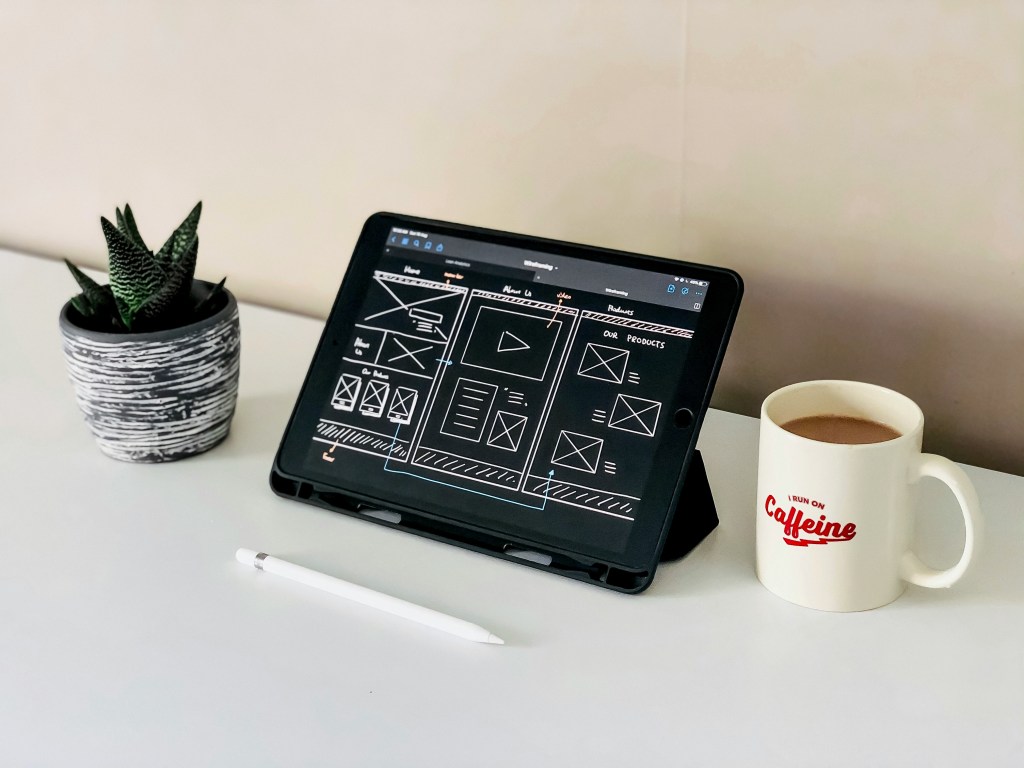
Wireframing enables designers to transform abstract concepts into useful visual representations. It offers a visual interpretation of the initial ideas, enabling team members to grasp and discuss the proposed structure and functionality effectively.
Establishing Layout and Structure:
– By prioritizing layout and structure over design elements, wireframes guarantee the inclusion and proper arrangement of all essential components. This phase aids in structuring content hierarchies and user pathways, ensuring easy access to crucial information and features.
Facilitating Collaboration and Communication:
– Wireframes serve as a universal language among designers, developers, stakeholders, and clients. They provide a visual tool that is easily comprehensible and open for discussion, promoting clear communication and minimizing misinterpretations.
WHAT DOES IT HELP ACHIEVE?
Detecting Usability Challenges:
– Wireframing enables the early evaluation of user pathways and interactions. By charting the user’s journey within the site or app, designers can pinpoint possible usability issues and implement required adjustments.
Efficient Resource Management:
– Rectifying layout and functionality issues during the wireframing phase proves more time-effective than making modifications in subsequent design or development stages. Wireframes offer a swift and cost-efficient means of enhancement, allowing for refinements without significant resource allocation.
Emphasizing Content and Features:
– Wireframing assists in prioritizing content and features based on their significance and alignment with user requirements. Through visual layout representations, designers can ensure vital information and functions are prominently displayed, while less crucial elements are suitably positioned.

Photo by pan zhen on Unsplash; Edited by Juan Castillo
 JUAN CSTL